Digital Kitchen Scale
Essential for cup-to-gram accuracy and repeatable bakes.
Shop scales ↗Also known as makhan, मक्खन.
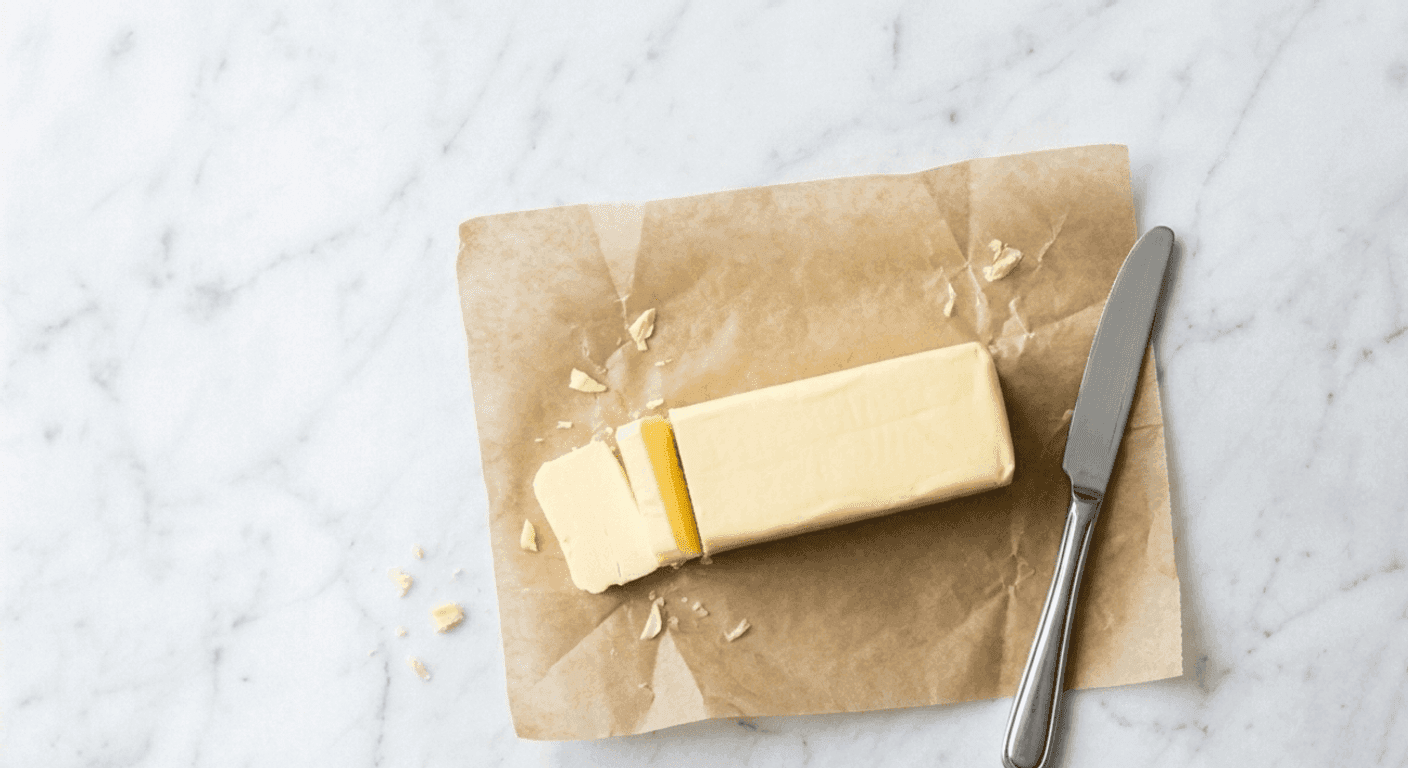
Churned cream containing about 80% fat, 15% water, and 5% milk solids.
Use 1:1 by weight
Similar solid/melted behaviour. Adds subtle coconut flavour. Works well in cookies and quick breads.
Common single-unit weights for butter — useful when a recipe calls out a specific count instead of a volume.
| cups | grams |
|---|---|
| 1/4 cups | 57.0 grams |
| 1/3 cups | 75.0 grams |
| 1/2 cups | 114 grams |
| 1 cups | 227 grams |
| 1.50 cups | 341 grams |
| 2 cups | 454 grams |
| 3 cups | 681 grams |
| 4 cups | 908 grams |
Ingredient-specific, density-based conversions for baking
Optional shopping references for bakers who want to compare tools and pantry options related to butter.
Essential for cup-to-gram accuracy and repeatable bakes.
Shop scales ↗Useful for quick volume checks before converting to weight.
Shop measuring sets ↗Disclosure: Some outbound links are affiliate links. As an Amazon Associate, CupOrGram earns from qualifying purchases. Learn more.
Similar solid/melted behaviour. Adds subtle coconut flavour. Works well in cookies and quick breads.
Similar solid/melted behaviour. Adds subtle coconut flavour. Works well in cookies and quick breads.
No milk solids or water. Richer flavour. Won't create the same steam lift in pastry.
No milk solids or water. Richer flavour. Won't create the same steam lift in pastry.
For low-fat baking. Changes texture significantly. Works best in muffins and quick breads.
For low-fat baking. Changes texture significantly. Works best in muffins and quick breads.
Refrigerate for 1-2 months. Freeze for up to 6 months. Keep wrapped to prevent odour absorption.
Creates flaky layers in pastry (solid fat between dough layers). The water turns to steam in the oven, creating lift. Milk solids contribute to browning and flavour.
For laminated dough: temperature and exact fat mass impact layer definition.
For creaming methods: weight keeps butter-to-sugar balance stable.
For custards: tight dairy ratios reduce curdling risk.
Baseline reference: 1 cup butter = 227g. In real kitchens, a practical range is usually 213g-241g per cup (6% band).
Why this happens: temperature and fat phase (solid vs softened vs melted) change effective volume.
Figures use the US cup (236.6 ml).1 cup of butter weighs 227 grams.
Coconut Oil (1:1 by weight), Ghee (Use slightly less (7/8 ratio) since ghee is 100% fat), Applesauce (1:1 (reduces fat significantly))
Cup, tablespoon, and teaspoon weights for all ingredients, sourced and cross-checked.