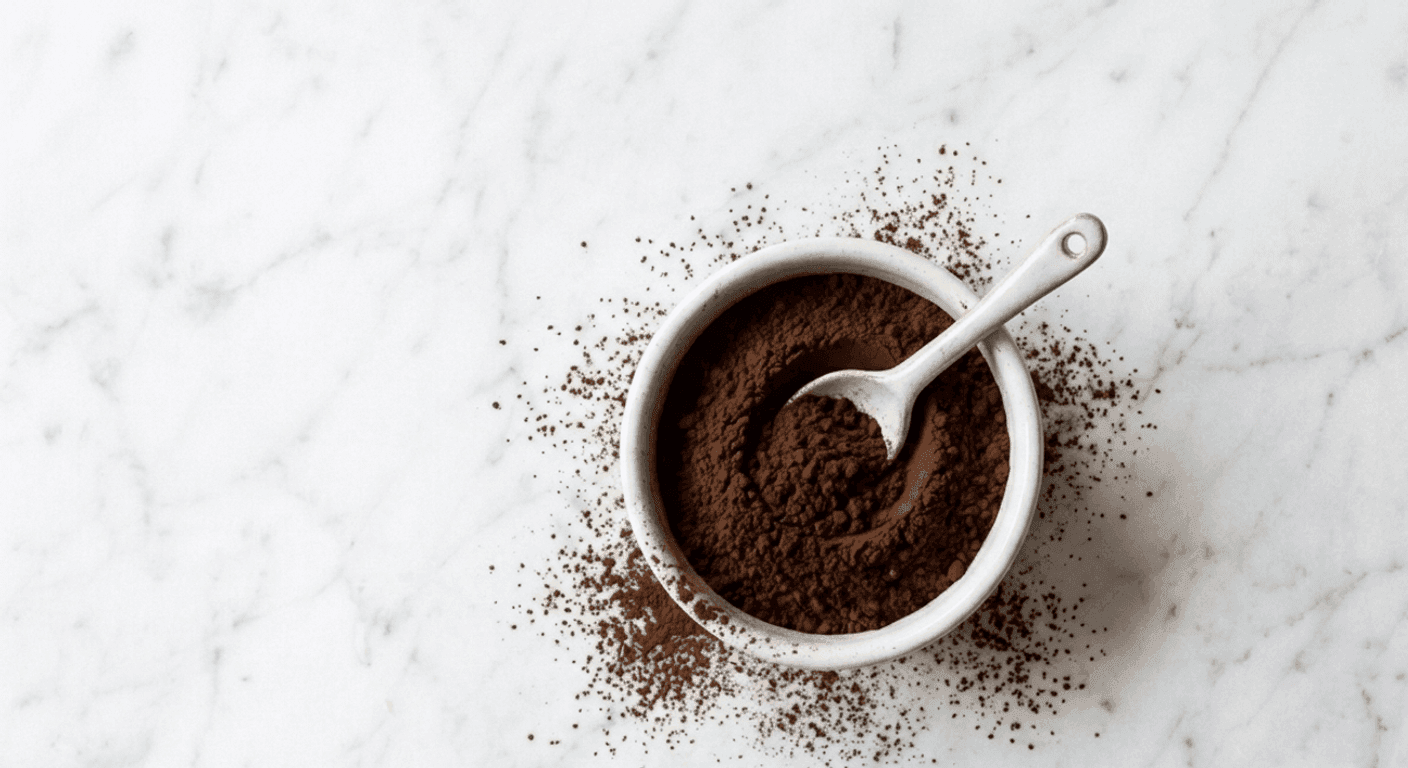
Unsweetened powder made from roasted, ground cacao beans with fat removed.
Cocoa powder is roasted cacao with most of the cocoa butter pressed out, leaving a fat-light, starch-and-protein-rich powder that delivers chocolate flavor without melting solids. Because it is essentially defatted, it behaves like a dark, bitter flour in batters, contributing color and tannic depth while quietly absorbing liquid and weakening gluten.
Also Called
cacao powderunsweetened cocoa
Reviewed by the CupOrGram Editorial TeamSources: King Arthur Baking, USDA FoodData CentralMethodology
Properties
Density Index
0.35 g/cm3
1 Cup Weight
82g
Texture
Dry
Category
Baking
Top Substitute
Cacao Powder
Use 1:1
Raw, unroasted version. More bitter and fruity. Same weight and volume.
Devil's food and old-fashioned chocolate layer cakes, where natural cocoa's acidity activates baking soda for a tender crumb and reddish-brown hue.
Brownies and flourless tortes, where Dutch-process cocoa contributes smooth, mellow chocolate flavor without the sharp edge that fights butter and sugar.
Hot cocoa, frostings, and dusting work — anywhere the powder stays raw or barely cooked and you taste the roast character directly.
What to watch
Swapping natural for Dutch-process (or vice versa) without rebalancing leavening — Dutched cocoa is pH-neutral and will not react with baking soda alone, leaving cakes flat and metallic-tasting.
Treating cocoa as a flavoring rather than a dry ingredient — replacing 30g flour with 30g cocoa shifts the starch budget and can leave brownies sodden and short on chew.
Sifting and blooming get skipped: dry cocoa clumps stubbornly, and unbloomed powder reads dusty rather than deeply chocolatey, especially in cold applications like buttercream.
Ingredient-specific, density-based conversions for baking
82.8
grams1 cups of Cocoa Powder equals 82.8 grams
Ingredient-specific · density-based
Cup size
Based on us cup (236.6 ml) · density data from baking references and our own measurements.
What the sources say cocoa powder weighs
Published values, quoted at the exact measure each source lists. Sources round differently and assume different fill techniques — which is why they rarely agree to the gram.
Source
Listed measure
Weight
USDA FoodData Central
1 tbsp
5.4 g
USDA FoodData Central
1 cup
86 g
King Arthur Baking
1/2 cup
42 g
CupOrGram standardizes on 82 g per cup (5 g per tablespoon, 2 g per teaspoon) and uses that single value on every page — how we reconcile the sources.
Recipes using Cocoa Powder
Gram-first recipes built on the same measured densities as this page — weigh straight from the recipe, no conversion needed.
Airtight container in cool, dry place. Lasts 2-3 years.
Baking Science
Natural cocoa is acidic (pH ~5), Dutch-process is neutral (pH ~7-8). This affects leavening: natural works with baking soda, Dutch with baking powder.
Recipe Notes
Classic fudgy brownies
Dutch-process is the default here — its lower acidity lets butter and brown sugar lead, and the deep mahogany color reads as intensely chocolate. Bloom the cocoa in melted butter for 30 seconds before adding sugar; the fat dissolves the volatile aromatics that water alone leaves locked in the powder.
Devil's food layer cake
This is one of the few cakes that genuinely needs natural cocoa. The acidity reacts with baking soda to lift the crumb and produce the slightly russet color the style is named for. Substituting Dutched cocoa without adding an acid like buttermilk or vinegar will give you a denser, browner, less interesting cake.
Chocolate buttercream
Sift cocoa with the powdered sugar before adding to softened butter, then bloom a tablespoon of the mixture in a teaspoon of hot espresso or water to pull out flavor. Untreated cocoa in buttercream tastes thin and powdery; bloomed cocoa tastes like ganache.
Common Pitfalls
Switching brands without re-checking weight can change texture and bake time.
Using volume-only measurements for dense ingredients can overshoot recipe targets.
Expired leaveners can underperform even when measured correctly.
Brand Variance & Measuring Method
Baseline reference: 1 cup cocoa powder = 82g. In real kitchens, a practical range is usually 77g-87g per cup (6% band).
Why this happens: fine powders and leaveners settle during storage, changing cup density.
Figures use the US cup (236.6 ml).
Common Questions
Can I use Dutch-process and natural cocoa interchangeably?
Only when the recipe is leavened with baking powder, which carries its own acid. If the recipe uses baking soda as the sole leavener, you need natural cocoa's acidity to activate it, or the cake will not rise properly.
Why does my cocoa taste dusty or chalky in no-bake recipes?
Raw cocoa needs heat or fat to release its aromatics. Whisk it into warm cream, melted butter, or hot coffee for at least a minute before incorporating — this blooming step is the single biggest upgrade to icebox cakes, mousses, and frostings.
Is black cocoa just a darker Dutch-process?
Yes — black cocoa is ultra-Dutched, alkalized to a pH around 8 for the inky color and Oreo-cookie flavor. It has almost no leavening compatibility and very little fat, so cut it with regular Dutch-process at roughly 1:3 unless you want a dry, intensely dark crumb.