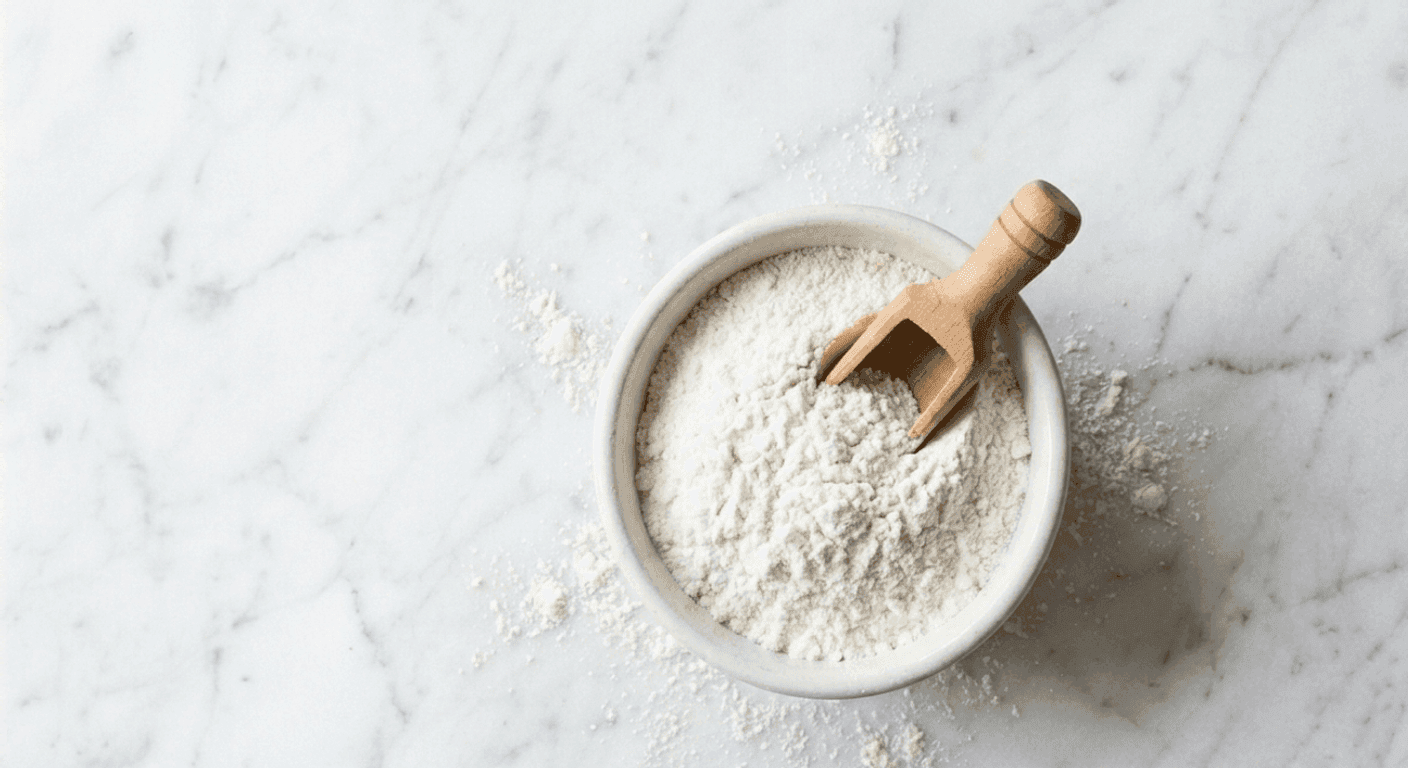
Also known as maida, plain flour, refined wheat flour, मैदा.
The most common baking flour, made from a blend of hard and soft wheat.
All-purpose flour sits at 10 to 12 percent protein, which is enough gluten to hold a sandwich loaf together but soft enough to keep a muffin tender. That middle ground is why most American baking recipes default to it, and why understanding its behavior unlocks dozens of recipes at once.
Also Called
plain flourap flourmaidarefined wheat flourमैदा
Reviewed by the CupOrGram Editorial TeamSources: King Arthur Baking, USDA FoodData CentralMethodology
Properties
Density Index
0.53 g/cm3
1 Cup Weight
125g
Texture
Dry
Category
Flour
Top Substitute
Cake Flour + Cornstarch
Use 1:1 (sub 2 tbsp per cup with cornstarch)
Lower protein gives a more tender crumb. Best for cakes and pastries.
Drop biscuits, pancakes, banana bread, and quick breads where you want some chew but not the toughness bread flour develops under mixing.
Chocolate chip cookies and bar cookies, where AP's protein gives lift and a slight chew without the cottony crumb cake flour leaves behind.
Roux, pan gravies, and dredging fried chicken — its starch gels cleanly and its protein crisps when fried in shallow oil at 350 to 375 F.
What to watch
Scooping straight from the bag packs 140 to 160 g into a cup instead of the standard 120 g, which is the single biggest reason home bakers get leaden results.
Brand matters more than the label suggests — King Arthur runs near 11.7 percent protein, Gold Medal closer to 10.5, and that gap shows up in chew and rise.
Bleached and unbleached are not interchangeable in tender crumb work; bleached absorbs more liquid and gives cakier results, unbleached holds structure better in bread-adjacent recipes.
Ingredient-specific, density-based conversions for baking
125
grams1 cups of All-Purpose Flour equals 125 grams
Ingredient-specific · density-based
Cup size
Based on us cup (236.6 ml) · density data from baking references and our own measurements.
What the sources say all-purpose flour weighs
Published values, quoted at the exact measure each source lists. Sources round differently and assume different fill techniques — which is why they rarely agree to the gram.
Source
Listed measure
Weight
King Arthur Baking
1 cup
120 g
CupOrGram standardizes on 125 g per cup (8 g per tablespoon, 3 g per teaspoon) and uses that single value on every page — how we reconcile the sources.
Recipes using All-Purpose Flour
Gram-first recipes built on the same measured densities as this page — weigh straight from the recipe, no conversion needed.
All-purpose flour is white wheat flour milled from a blend of hard and soft wheat, landing at 10 to 12 percent protein — enough gluten strength for yeast breads, soft enough for cakes and cookies. The name is American; most of the world sells the same flour under a different label, which is where recipe confusion usually starts.
UK & Australia: plain flour
Plain flour is the same product — substitute 1:1 by weight. Self-raising flour is not: it already contains baking powder and salt, so using it in place of all-purpose doubles up the leavening.
India & South Asia: maida
Maida is the closest equivalent — a finely milled refined flour that works 1:1 in most recipes. It runs slightly softer and finer than US all-purpose, so breads come out a touch less chewy.
What it isn't
Not bread flour (12–14% protein), not cake flour (7–9%), not self-rising. When a recipe just says "flour" with no qualifier, all-purpose is almost always what it means.
Recommended Tools & Pantry Picks for All-Purpose Flour
Optional shopping references for bakers who want to compare tools and pantry options related to all-purpose flour.
Digital Kitchen Scale
Essential for cup-to-gram accuracy and repeatable bakes.
Airtight container in a cool, dry place. Lasts 6-8 months at room temperature, up to 1 year refrigerated.
Baking Science
Contains 10-12% protein. The gluten network it forms gives baked goods structure. Too much flour makes bakes dry and dense.
Recipe Notes
Chocolate Chip Cookies
Stick with unbleached AP at 120 g per cup, weighed. The 10 to 12 percent protein gives the chew most people picture when they think 'cookie' — bread flour overshoots into bagel territory, cake flour collapses into shortbread. Rest the dough 24 hours so the flour fully hydrates and the edges crisp deeper in the oven.
Buttermilk Pancakes
AP's moderate protein lets pancakes hold their shape on the griddle without turning rubbery. Whisk the dry ingredients, then fold in the wet — overmixing develops gluten and produces a tight, chewy stack instead of the open, tender crumb buttermilk is meant to give you.
Pie Crust
AP works for pie crust but sits at the high end of what you want — protein creates flake but also toughness if water gets worked in too aggressively. Keep butter in pea-sized pieces, add ice water one tablespoon at a time, and stop the moment the dough holds together when squeezed. Rest one hour minimum before rolling.
Common Pitfalls
Switching brands without re-checking weight can change texture and bake time.
Using volume-only measurements for dense ingredients can overshoot recipe targets.
Scooping directly from the bag compresses flour and can make bakes dry.
Brand Variance & Measuring Method
Baseline reference: 1 cup all-purpose flour = 125g. In real kitchens, a practical range is usually 110g-140g per cup (12% band).
Why this happens: flours and grains compact differently based on scoop method, humidity, and grind fineness.
Figures use the US cup (236.6 ml).
Common Questions
Can I substitute bread flour for all-purpose flour 1:1?
In most recipes yes, but expect more chew and slightly less spread — the extra 1 to 2 percent protein tightens crumb in cookies and adds structure to quick breads. For cakes and tender pastries, reduce the bread flour by two tablespoons per cup and add two tablespoons of cornstarch.
How much does a cup of all-purpose flour weigh?
The industry standard is 120 g per cup using the spoon-and-level method, though King Arthur uses 120 g and Gold Medal lists 125 g. If you weigh nothing else in baking, weigh flour — volume measurement is the largest source of variability in home results.
Does all-purpose flour go bad?
Unopened bags last about a year at room temperature; once opened, the oils in the wheat germ start to oxidize and you'll get stale or faintly bitter flavors within six to eight months. Store opened flour airtight, and freeze it if your kitchen runs warm or you bake infrequently.
Is all-purpose flour the same as plain flour?
Yes. Plain flour is simply the UK and Australian name for the same everyday white wheat flour — swap them 1:1 by weight. The one to watch is self-raising flour, which is plain flour with baking powder and salt already mixed in; substituting that for all-purpose will change the recipe's leavening.